Running a one-person business in France (2026): the complete toolkit
How to run a freelance business in France as a solo operator — the complete toolkit of tools for freelancers in France, from micro-entrepreneur legal setup and banking to accounting, e-invoicing, hosting and insurance.

Solo operator · one-person venture studio in Europe (SEO · affiliate · micro-SaaS) · 12 June 2026 · updated 12 June 2026 · 7 min read

Most “how to freelance in France” guides stop at the paperwork. This one is the operational toolkit: the actual stack you run a one-person business on in France, layer by layer — and, crucially, which layers have to be French and which are pan-EU picks that work anywhere.
That distinction is the whole point. Your bank and accounting are bound to French rules — URSSAF, the micro-entrepreneur thresholds, the facturation électronique reform — so local tools win there. Your hosting, email and AI are not; the best European pick is the best pick whether you are in Paris, Lisbon or Tallinn. Below, each need gets the French-specific reality, one top pick, and a link to the full comparison.
Treat the specifics here as approximate. French rules shift, and your situation is yours — verify with URSSAF or an expert-comptable before you rely on anything.
1. Legal setup: the micro-entrepreneur régime
The first French decision is your status. Most solos start as a micro-entrepreneur (the régime that absorbed the old auto-entrepreneur): you register with URSSAF, get a SIRET, and pay social contributions and tax as a simple percentage of turnover — no balance sheet, no VAT until you cross a threshold. It is the lightest possible way to be legally self-employed in France, which is exactly why it suits writers, developers, designers and consultants.
The trade-off is the turnover ceilings and the fact that you cannot deduct real expenses — past a certain size you outgrow it and move to a régime réel or a company. The full walk-through of who qualifies and when to switch is in freelancing in France: micro-entrepreneur.
2. Business bank account
Micro-entrepreneurs are not always legally required to fully separate business and personal money, but above a modest turnover French rules expect a dedicated account, and either way it is the single biggest favour you can do your future tax self. A separate account keeps your bookkeeping clean and your expert-comptable cheap. The French-built business accounts go further than a plain IBAN: they bundle invoicing, expense tracking and accounting exports around the freelancer’s actual workflow.
The top pick for solos is Qonto — a French business account designed around the self-employed and small companies, with built-in invoicing and accounting integrations.
Qonto
A French business account built for the self-employed and small teams: a real IBAN, built-in invoicing, expense management and clean exports to your accounting tool. An English interface and support make it a common pick for internationals freelancing in France.
See how it stacks up against the alternatives in the business bank accounts for EU freelancers roundup.
3. Accounting & invoicing
This is where French freelancing gets real. As a micro-entrepreneur you must track turnover against the régime’s ceilings, declare revenue to URSSAF (monthly or quarterly), issue compliant invoices and — once you cross the VAT threshold — start charging TVA. Software that knows the micro-entrepreneur rules natively saves you both a fortune in expert-comptable hours and a lot of avoidable mistakes.
The top pick is Indy — a French accounting and invoicing tool built specifically for micro-entrepreneurs and professions libérales.
Indy
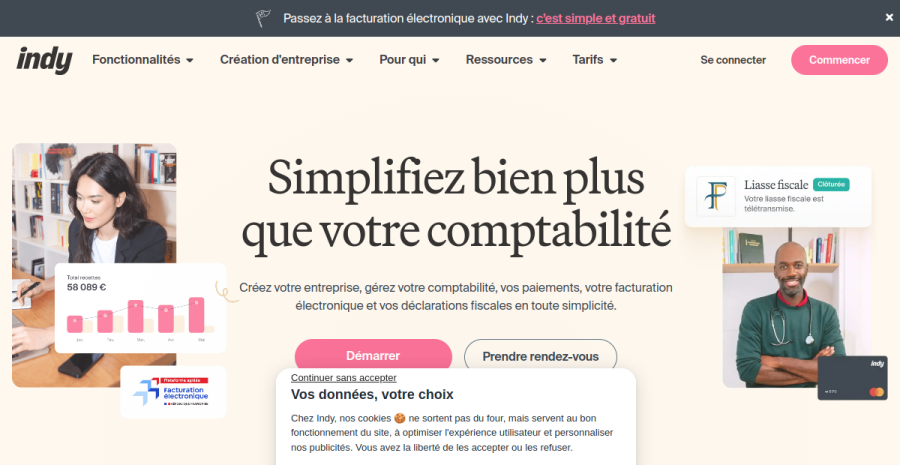
French accounting software that speaks the local rules: micro-entrepreneur turnover tracking, URSSAF declarations, compliant invoicing and bank-feed reconciliation. Pairs neatly with a business account so transactions flow straight into your books, with a workflow aimed at solos rather than accountants.
The full comparison — including what to hand to your expert-comptable versus do yourself — is in the accounting software for French freelancers roundup.
4. Invoicing & e-invoicing (the 2026 French reform)
France is rolling out mandatory B2B e-invoicing — facturation électronique. Under the reform, every business — including micro-entrepreneurs — will need to be able to receive structured electronic invoices, with the obligation to issue them phasing in by company size over the following period. A PDF emailed to a client will no longer automatically count as a compliant e-invoice; invoices flow through certified platforms (the plateformes de dématérialisation). The practical takeaway: pick invoicing software that already handles these structured formats and the certified-platform flow, so the reform is a non-event for you rather than a scramble.
(Exact thresholds and deadlines for facturation électronique are still settling — verify the current schedule before you assume a date applies to you.)
The tools that handle compliant invoicing for solos — French formats included — are in the invoicing software for EU solopreneurs roundup.
5. Website & hosting
Your status and your bank are French; your website is not. Hosting is a pan-EU decision, and the only France-flavoured nuances are preferring EU data-centre locations and a GDPR-friendly host — both easy to satisfy. Pick on speed, price and ease, not nationality.
The top pick for a lean solo site is Hostinger — cheap, fast, beginner-friendly, with EU data-centre options.
Hostinger
Budget-friendly hosting that is genuinely fast and easy to set up, with EU data-centre locations and a managed WordPress option. A sensible default for a one-person business that just needs a reliable home on the web without overpaying.
Compare it against the rest in the web hosting for solopreneurs in Europe roundup.
6. Email & audience
An email list is the one asset that survives a pivot — and for a French business it pays to keep subscriber data inside the EU and run double opt-in, both for GDPR comfort and because “EU-hosted” is increasingly what your audience wants too. This is a pan-EU layer, but the EU-hosted angle makes some tools a better fit than others.
The top pick is Brevo — a French company, EU-hosted, GDPR-friendly, with a usable free tier.
Brevo
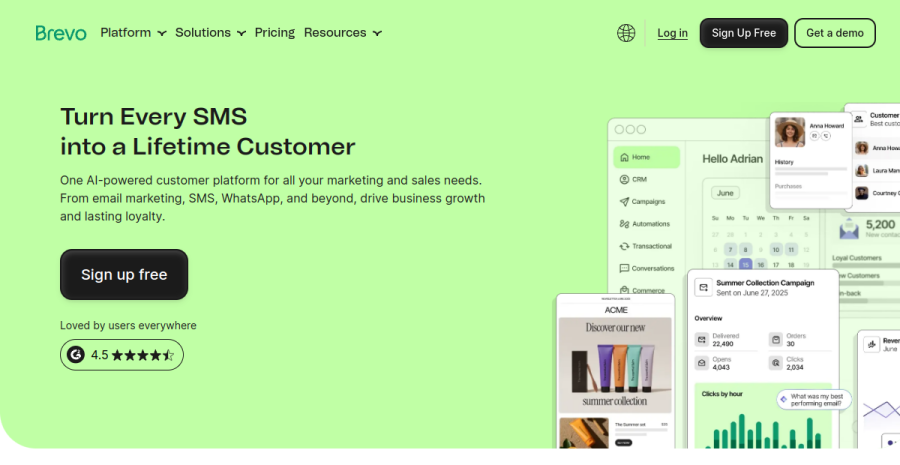
A French, EU-hosted email and marketing platform that keeps subscriber data inside the EU and supports double opt-in out of the box — a clean fit for a French one-person business. The free tier is generous enough to start an audience before you pay a cent.
The full line-up, including which tools keep data in the EU, is in the email marketing roundup.
7. Insurance & pension
This layer is very French and very easy to ignore until it bites. As a micro-entrepreneur your social contributions to URSSAF already buy you into the French social régime (the former RSI, now folded into the general régime) for basic health and pension cover — but that baseline is thin, and pension rights accrue slowly on micro-entrepreneur turnover. Topping up with complementary health (mutuelle), professional liability (RC Pro, mandatory for some activities) and a private pension is part of running the business, not an afterthought.
The wider picture — including how French régime cover compares across Europe and where to top it up — is in insurance & pension for the self-employed.
8. AI & productivity
The final layer is the most portable of all. AI assistants, writing tools, project trackers and note systems have nothing France-specific about them — the best European-friendly pick is the best pick everywhere. This is where a single person genuinely carries the work of a small team, so choose a couple of tools that replace real work and stop there.
The current line-up for solos is in the AI tools roundup.
Geo note: what is French, what is pan-EU
The shape of a French one-person business stack is simple once you see the split:
- French by necessity — your bank (Qonto) and accounting (Indy) are bound to French rules: URSSAF, the micro-entrepreneur thresholds, facturation électronique, the French social régime. Use local tools here.
- Pan-EU, works anywhere — your hosting (Hostinger), email (Brevo) and AI picks are not France-specific. The best European-friendly option is the right one whether you operate from Lyon or Lisbon.
Get the French layers right, lean on the pan-EU ones, and keep verifying the specifics — rules and thresholds here move. For the country-agnostic master version of this stack, work up one level to how to start and run a one-person business in Europe.
This is the French hub — each need links to its full comparison or guide. Bookmark it, and treat every figure and deadline as “approximately right, verify before you rely on it.”
For the account itself — Wise, Qonto, Shine and the dedicated-account rule — see the best bank account for French auto-entrepreneurs.
The e-invoicing calendar, step by step: France e-invoicing 2026 for micro-entrepreneurs.
Part of the complete EU admin guide for solopreneurs.
Frequently asked questions
How do I run a freelance business in France?
What tools do French freelancers (micro-entrepreneurs) need?
What is the best bank and accounting setup for a micro-entrepreneur?
Do I need French-language tools or are there English ones?
Keep reading
Running a one-person business in Germany (2026): the complete toolkit
How to run a freelance business in Germany as a solo operator — the complete toolkit of tools and software for freelancers in Germany, from Freiberufler legal setup and banking to accounting, e-invoicing, hosting and insurance.
Running a one-person business in Spain (2026): the complete toolkit
How to run a freelance business in Spain as a solo operator — the complete toolkit of tools and software for autónomos in Spain, from alta de autónomo and banking to accounting, e-invoicing (Verifactu), hosting and insurance.
Best business bank account for French freelancers (auto-entrepreneurs, 2026)
Which account a French freelancer (auto-entrepreneur / micro-entrepreneur) should open — Wise, Qonto, Shine, Revolut and N26 compared for low-FX international income, the legally-required dedicated account, URSSAF handling and English support. Honest and EU-aware.
Everything here is free. If something saved you time, you can support the author — no product, no signup.